Introduction to Citation Opportunity Mapping
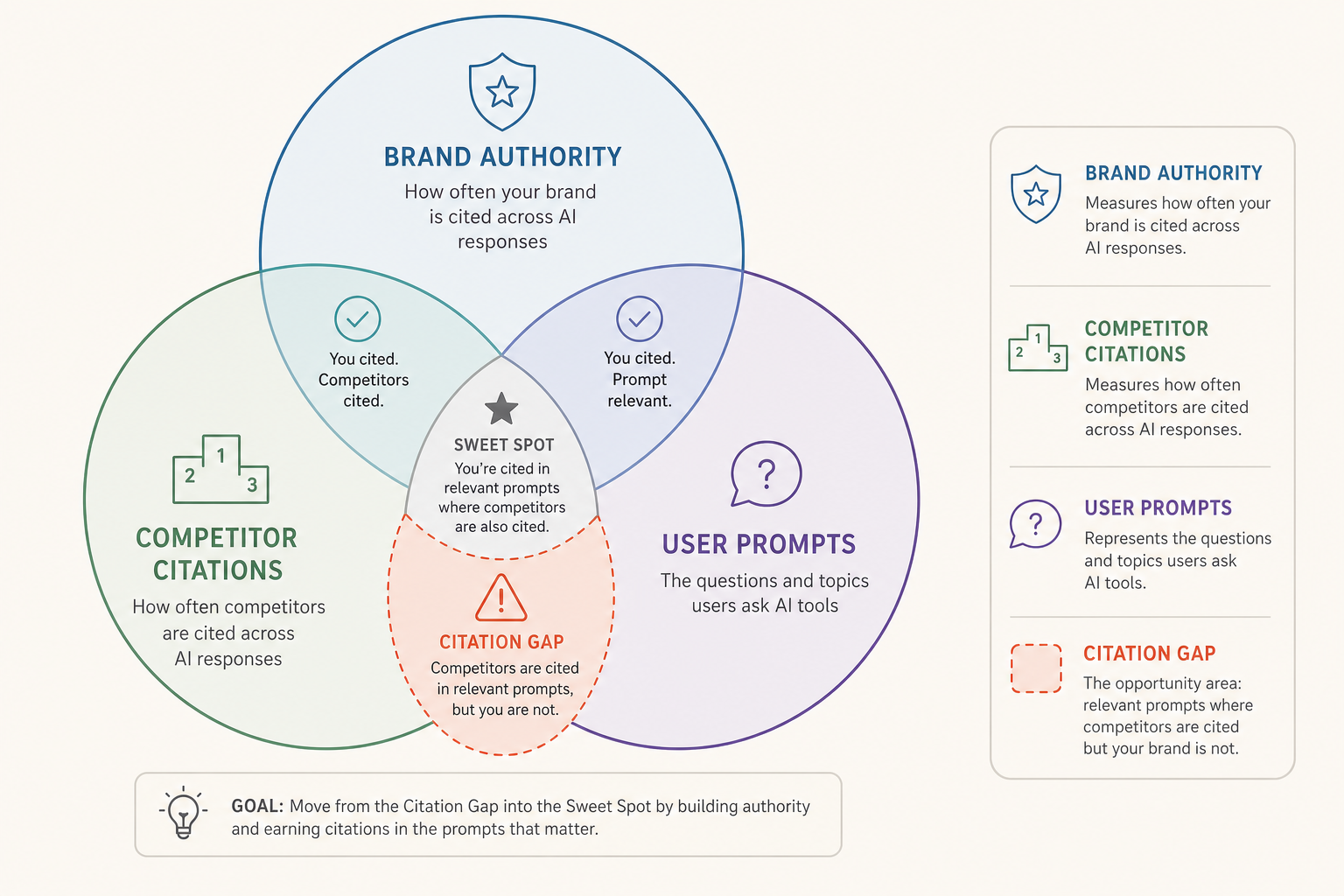
In the landscape of Answer Engine Optimisation (AEO) and Generative Engine Optimisation (GEO), visibility is not just about being indexed; it is about being cited as a relevant solution during a conversational AI exchange. Citation Opportunity Mapping is the tactical process of identifying high-value prompts—questions or requests for information—where your brand should logically appear based on its expertise and market position, yet is currently absent. This lesson moves beyond general search tracking to focus on the 'Gap Analysis' of AI mentions.
While traditional SEO focuses on keyword rankings, AI models like Perplexity, Gemini, and ChatGPT prioritise entity relationships and consensus. If a model mentions your top three competitors in response to a query like "What are the most reliable cloud-based CRM systems for small UK businesses?" but omits you, that is a citation gap. Identifying these gaps allows us to reverse-engineer the reasons for omission and implement specific authority-building measures.
The Framework of Relevance: Three Core Pillars
To map opportunities effectively, we must first define where our brand deserves to be. We categorise these into three distinct buckets:
- Direct Solution Queries: Prompts directly asking for product recommendations or service providers in your niche.
- Informational Context Queries: Prompts where your brand's research, data, or whitepapers should be cited as a source of truth.
- Comparative/Contrasting Queries: Prompts asking for alternatives to a competitor or the difference between specific market players.
Step-by-Step Methodology for Mapping Gaps
1. Seed Prompt Generation
Start by listing the top 50 'commercial intent' questions your customers ask during the sales cycle. Convert these into natural language prompts. For example, instead of "best energy efficient boilers," use "I live in a three-bedroom Victorian terrace in Manchester; which energy-efficient boiler brands should I consider for high water pressure?"
2. The Multi-Model Audit
Run these prompts through the major players: Perplexity (for real-time web citations), ChatGPT (for general brand sentiment), and Google Gemini (for SGE integration). Record which brands are cited in the 'sources' or 'references' list.
3. Competitor Citation Frequency Analysis
Identify the 'AI Darlings'—competitors who consistently appear across multiple models. Analyse the sources these models cite to justify their inclusion. Often, you will find they are being pulled from specific third-party review sites, niche industry directories, or recent news coverage that you have neglected.
4. Identifying the 'Unclaimed Territory'
Look for prompts where the AI provides a general answer without naming specific brands. This is 'Unclaimed Territory.' It represents an opportunity to become the first-mover entity for that specific query by creating a definitive guide or landing page that answers that prompt more comprehensively than any existing source.
Worked Example: Sustainable Fashion Retailer
Scenario: A boutique UK retailer specialising in seaweed-based fabrics (Brand X).
The Prompt: "I am looking for sustainable clothing brands that use innovative, non-plastic materials and ship to London."
The AI Result: The model cites Pangaia, Stella McCartney, and Allbirds. It mentions seaweed fabric as an emerging trend but does not cite Brand X.
The Analysis:
- Source Check: The AI cites a Vogue Business article from 2023 and a Sustainability Guide from The Guardian.
- The Gap: Brand X has great products but has never been featured in the specific industry round-ups the models are using as their 'Ground Truth' databases.
- The Opportunity: Brand X needs to pitch a founder story to the journalists who wrote those specific cited articles and create a 'Guide to Seaweed Fabrics' on their own site to capture the entity relationship.
Reverse-Engineering the Cite-Ability
Once a gap is identified, you must determine why the gap exists. We use the 'C-A-P' audit:
- Credibility: Does the model find third-party validation for your brand?
- Accessibility: Is your data in a format (Schema.org, clear tables, lists) that the model can ingest?
- Proximity: How close is your brand to the core 'concept' of the prompt in the model's high-dimensional vector space?
Tools for the Practitioner
While manual auditing is essential for nuance, practitioners use several tools to scale mapping:
- Perplexity Pages: To see how models aggregate data on a topic.
- Google Search Console (Custom Filters): To find queries where you have high impressions but low CTR, indicating the AI Overview might be 'stealing' the click using other sources.
- NotebookLM: Upload your own assets and competitor assets to see how the model prioritises information between them.
Putting it into Practice
To move from analysis to action, follow this checklist for every client engagement:
- Audit the Top 20 Commercial Prompts: Identify where competitors are mentioned and you are not.
- Trace the Source: Click the citations provided by the AI. Index these platforms as your primary outreach targets.
- Content Alignment: Create a dedicated page on your site for every 'Unclaimed Territory' prompt identified.
- Structured Data Overhaul: Ensure the entities mentioned in the gap (e.g., location, material type, price point) are clearly defined in your Site's Schema markup.
- Monitor Velocity: Re-run the prompts every 30 days to see if visibility improves following your interventions.