Introduction
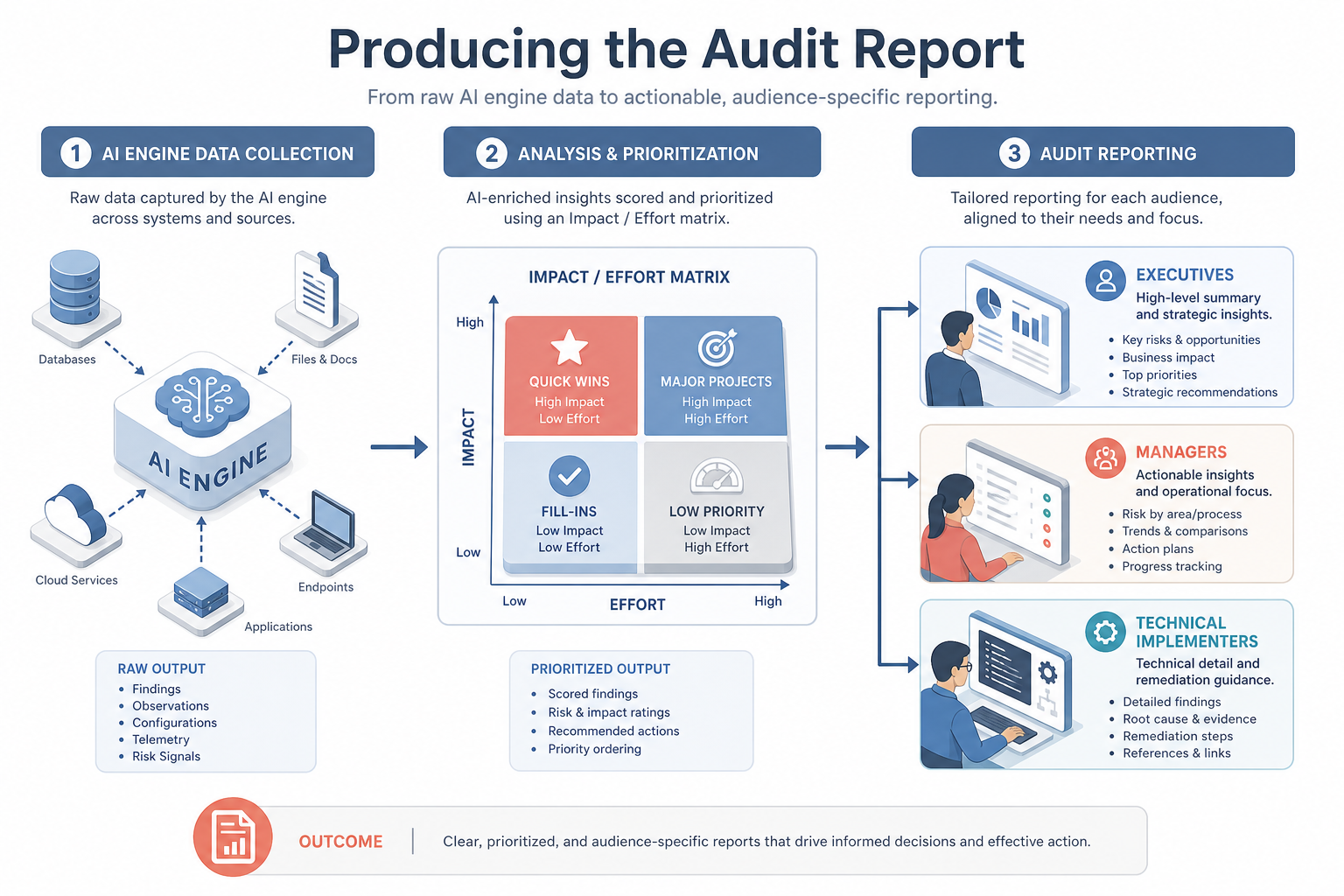
Transitioning from the data collection phase to the reporting phase is where an AI Visibility Practitioner truly adds value. While raw data from tracking tools and manual probes provides the 'what', the audit report provides the 'so what' and the 'now what'. A high-quality AI Visibility Audit report must bridge the gap between technical LLM (Large Language Model) behaviour and the client's commercial objectives. In this lesson, we will explore how to structure your findings, prioritise recommendations based on an AI-specific impact matrix, and present insights in a way that secures stakeholder buy-in.
The Anatomy of an AI Visibility Audit
An effective report is not a data dump. It is a narrative that explains how AI engines (like ChatGPT, Perplexity, and Google Gemini) perceive the brand. The structure should follow a logical flow from executive summary to granular technical requirements.
1. The Executive Summary
Strategic stakeholders often only read this page. It must contain:
- The Visibility Score: A composite metric of brand presence across key engines.
- Sentiment & Accuracy: Whether the AI is hallucinating or presenting the brand favourably.
- The Opportunity Gap: A high-level estimate of traffic or influence being lost to competitors.
- Top 3 Priorities: The immediate 'big wins'.
2. The Engine Performance Breakdown
Different engines have different 'personalities' and data sources. Your report should segment performance by:
- Conversational Search (e.g., ChatGPT/SearchGPT): Focus on citation frequency and brand narrative.
- Generative Search Experiences (e.g., Google GSE): Focus on how traditional SEO signals are being synthesised.
- Research Engines (e.g., Perplexity): Focus on the depth of technical data and source diversity.
3. Entity Health and Knowledge Graph Status
Describe how the brand exists as an 'entity' rather than just a keyword. Include a status update on your Schema.org implementation, Wikipedia/Wikidata presence, and the consistency of the 'N-A-P' (Name, Address, Phone) across the web, which acts as the foundation for AI trust.
Prioritisation: The Impact/Effort Matrix
Not all AI visibility issues are created equal. Use a 2x2 matrix to categorise your findings:
- Quick Wins (High Impact, Low Effort): Fixing broken Schema markup, updating a sparse LinkedIn company profile, or correcting major hallucinations in a popular engine.
- Strategic Projects (High Impact, High Effort): Launching a content hub to establish topical authority or securing mentions in top-tier industry publications used as training data.
- Low Priority (Low Impact, Low Effort): Minor tweaks to meta descriptions that AI engines mostly ignore.
- Resource Sinks (Low Impact, High Effort): Trying to manually influence every obscure LLM wrapper or bot.
Translating Technical Jargon
To ensure your report is actionable, you must translate technical AI concepts into marketing terminology.
- Instead of 'Low Vector Similarity', use: "Our content is not contextually relevant to the user's intent."
- Instead of 'Training Data Lag', use: "The AI is relying on outdated information from 2023."
- Instead of 'Citation Attribution', use: "The brand is mentioned, but we aren't getting the link/click-through credit."
Worked Example: A B2B Software Provider
The Client: 'DataStream Pro', a mid-sized SaaS company. The Problem: ChatGPT suggests their competitors 80% of the time for 'best data analytics for retail'.
The Audit Finding: DataStream Pro’s documentation is gated behind a login, preventing AI crawlers from seeing their unique features. Competitors have open 'Comparison Pages' and extensive documentation indexed by Common Crawl.
The Report Recommendation:
- Finding: Massive 'Crawl Gap' for LLMs.
- Impact: Complete invisibility in conversational research phases.
- Action: Create an un-gated 'Knowledge Base' sub-directory. Repurpose whitepapers into high-level, crawlable HTML summaries.
- Priority: High.
Visualising the Data
Charts in an AI audit should focus on 'Share of Model Mention'. A stacked bar chart showing the percentage of time your brand appears in the 'Top 3 Recommended' vs. competitors over a 30-day period is often the most persuasive visual for a client.
Putting It Into Practice
- Review your data: Extract the top 5 'Missing Citations' where your brand should have appeared but didn't.
- Categorise by Root Cause: Is it a lack of authority, a technical crawling issue, or poor content relevance?
- Draft the 'Action Table': Create a three-column table: Observation, Business Risk, and Recommended Fix.
- The 'Hallucination' Log: Document any factual errors the AI makes about the brand and trace them back to the likely source of incorrect information.
- Final Polish: Ensure every recommendation has a clear owner (e.g., Dev Team, Content Team, PR Team).