Introduction
To the modern search engine and the Large Language Model (LLM), the world is no longer a collection of strings—sequences of characters like 'London' or 'Apple'. Instead, the world is a map of things: entities. An entity is a singular, unique, well-defined, and distinguishable object or concept. In this lesson, we will move beyond the basic definition of an entity to understand how Generative Engine Optimisation (GEO) and AI visibility rely on the relationships between these entities within Knowledge Graphs. For a practitioner, understanding entities is the difference between ranking for a keyword and being 'known' by an AI as an authority in a specific niche.
What is an Entity?
An entity is a 'thing' or 'concept' that can be distinctively identified. Crucially, it is not a keyword. While the keyword 'jaguar' is ambiguous—it could refer to a car, a big cat, an operating system, or a guitar—an entity is unambiguous. Search engines use a process called 'Entity Disambiguation' to determine which specific thing a user is interested in based on context.
The Three Pillars of an Entity
- Identity: A unique identifier (often a Machine ID or URI) that separates it from all other entities.
- Attributes: Specific characteristics of the entity (e.g., a person has a birth date, a business has a VAT number).
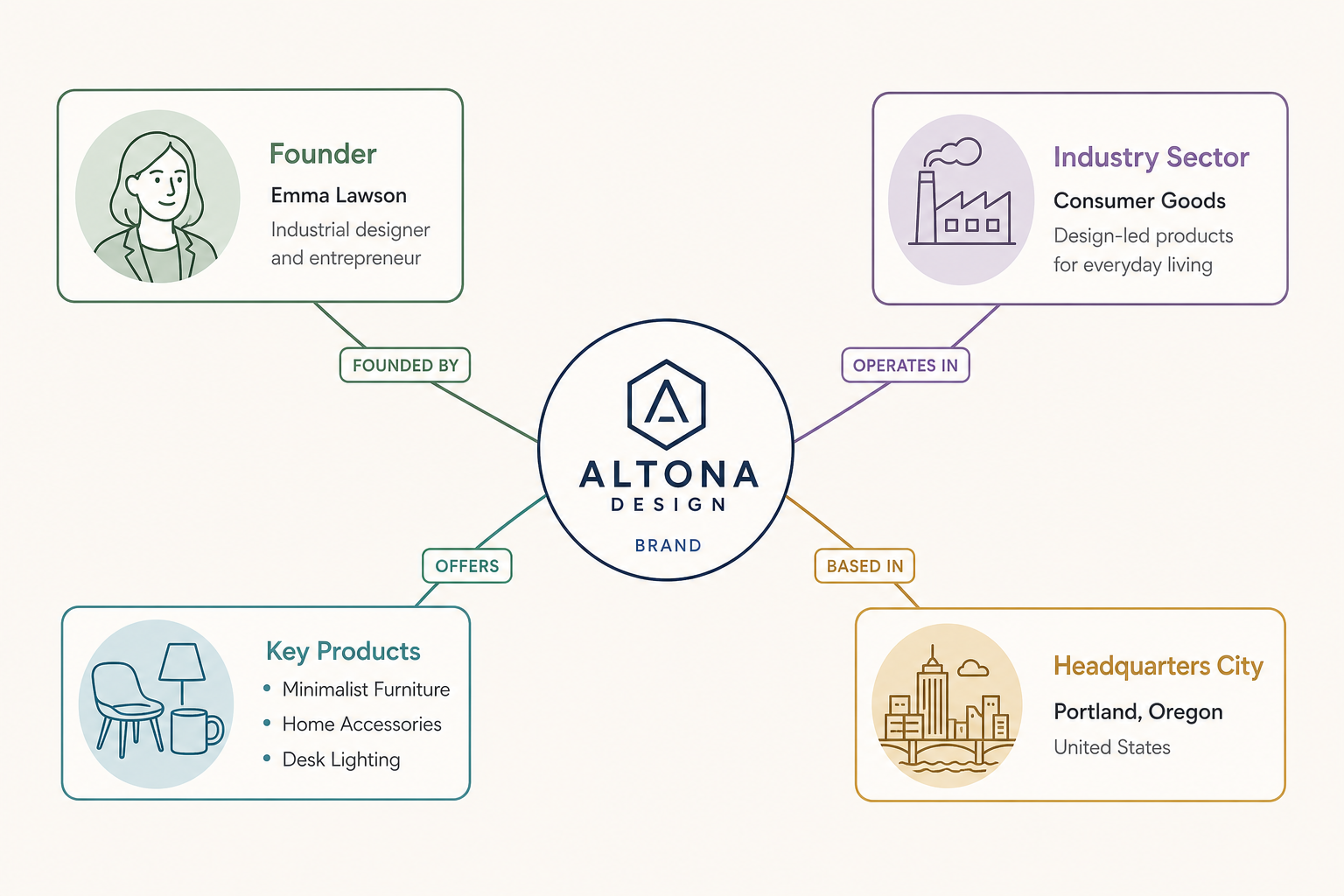
- Relationships: Connections to other entities (e.g., an author 'wrote' a book, a company 'headquarters' in a city).
The Shift: From Strings to Things
Google’s 2012 announcement 'Introducing the Knowledge Graph: things, not strings' marked a fundamental shift in information retrieval. For the AI Visibility Practitioner, this shift is critical because LLMs like ChatGPT or Claude do not just search for text matches; they use pre-trained embeddings to understand the semantic distance between entities.
How Search Engines See Entities
Search engines use Knowledge Graphs (like Google's Knowledge Graph or Bing’s Satori) as a structured database of facts. They crawl the web, identify mentions of entities, and update the confidence score of the relationships between them. If a website mentions 'Chris Dixon' alongside 'Andreessen Horowitz' and 'Crypto', the search engine reinforces the link between these entities.
How LLMs See Entities
LLMs operate differently. They don't have a static, structured 'graph' in the traditional sense, but their weightings (parameters) act as a high-dimensional map of concepts. When you prompt an LLM about an entity, it predicts the next token based on the statistical proximity of that entity to others. In GEO, our goal is to ensure that the LLM's 'latent space' contains strong, positive associations between our brand entity and the relevant problem-solving entities our customers care about.
Understanding Knowledge Graphs
A Knowledge Graph is a network of entities and their interlinking relationships. Think of it as a giant, digital brain.
Nodes and Edges
- Nodes: The entities themselves (e.g., 'London', 'The British Museum').
- Edges: The relationships between them (e.g., 'The British Museum' is located in 'London').
For practitioners, the value of a Knowledge Graph lies in 'Inference'. If an AI knows that Entity A is a 'Full-stack Developer' and Entity B is 'React.js', it can infer that Entity A likely knows Entity B, even if that specific fact isn't explicitly stated on a single page. This is the basis of topical authority.
Worked Example: The 'Sustainable Coffee' Brand
Imagine we are working for a brand called 'GreenBean Roasters'. To build entity visibility, we must define it within the Knowledge Graph ecosystem.
Step 1: Establish the Identity
We use Schema.org markup (JSON-LD) to tell search engines that GreenBean Roasters is an Organization. We provide its official name, logo, and social profiles using the sameAs property to link it to established entities like its LinkedIn page and its entry in Companies House.
Step 2: Define Attributes
We ensure the brand has a physical 'PostalAddress', a 'foundingDate', and 'founder' (who is also an entity). These attributes anchor the brand in reality.
Step 3: Map Relationships
We create content that links GreenBean Roasters to relevant industry entities. We publish a report on 'Fair Trade Certification' (an entity) in 'Ethiopia' (an entity) using 'Shade-grown methods' (an entity). By consistently appearing in the same context as these high-authority entities, GreenBean Roasters becomes a node in the 'Sustainable Coffee' subgraph.
Schema.org: The Language of Entities
Schema.org is the most important tool for the AI Visibility Practitioner. It is the vocabulary that both search engines and LLMs (via RAG - Retrieval-Augmented Generation) use to parse structured data smoothly. By using itemid or @id in your JSON-LD, you are explicitly giving your entity a unique URI, making it easier for AI to aggregate your data into their Knowledge Graphs.
Entity Salience and AI Visibility
Entity Salience refers to how central an entity is to a piece of content. In the eyes of an AI, a page about 'Digital Marketing' that mentions 'SEO' twenty times has high salience for both entities. However, if 'SEO' is only mentioned in a footer link, the salience is low.
To improve visibility in AI responses (like Perplexity or Google SGE/AI Overviews), your content must:
- Mention the core entity early.
- Use related 'LSI' entities (Latent Semantic Indexing—though more accurately, 'Co-occurrence entities').
- Provide clear, factual statements that are easy for an AI to extract as 'Triples' (Subject-Predicate-Object).
The Role of Wikipedia and Wikidata
Wikidata is the structured backend for Wikipedia and a primary data source for Google’s Knowledge Graph. While not every small business can have a Wikipedia page, every practitioner should understand how Wikidata IDs (e.g., Q42 for Douglas Adams) are used to disambiguate entities. Linking your niche-specific entities to Wikidata entries via sameAs is a powerful way to 'ground' your content in the global knowledge base.
Putting it Into Practice
To move from keyword-thinking to entity-thinking, follow these steps in your next campaign:
- Entity Audit: Identify the core entities you want your brand to be associated with. Use tools like the Google Natural Language API demo to see how an AI currently perceives your homepage.
- Structured Data Overhaul: Don't just use 'Article' schema. Use 'About' and 'Mentions' properties to explicitly link your content to established entities on Wikipedia or Wikidata.
- Contextual Linking: When writing, don't just link to your own pages using keyword anchors. Link out to high-authority entity nodes to provide 'contextual signals' to the AI.
- NAP Consistency 2.0: Name, Address, and Phone number are entity attributes. Ensure they are identical across the web to avoid 'fragmenting' your entity node.
- Author Entities: Treat your content creators as entities. Give them dedicated bio pages with links to their social profiles and professional certifications. Help the AI build an 'Expert' profile for them.
By treating your brand and its content as a collection of interlinked entities rather than just pages on a web server, you prepare your site for a future where generative AI is the primary interface for information discovery.